
The Adoptive Parents’ Changing Household
The Most Precious of CargoesThis flow follows Poor Woodcutter and Poor Woodcutter’s Wife as they move from opposing responses to the baby toward a fragile, loving family and its violent rupture.
increasing Bearing strength in each event
 decreasing
Bearing strength in each eventdecreasingOpposite Prayers
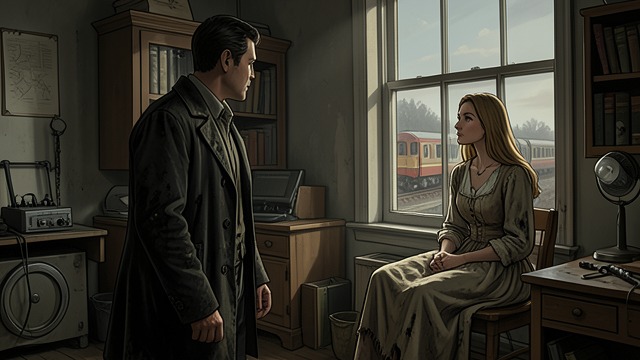
Opposite Prayers
Two meanings of childlessness
Poor Woodcutter gives thanks that he has no child to feed. Poor Woodcutter’s Wife privately grieves that she has no child to love.
A marriage under pressure
The couple share poverty and hardship but do not experience them in the same way. Her longing makes the passing train a source of hope; his practical fear makes any new dependent seem dangerous.
The Woodshed Refuge
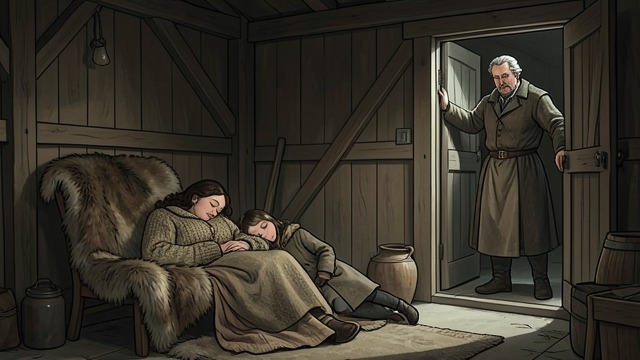
The Woodshed Refuge
Refusal and protection
Poor Woodcutter rejects the baby and threatens to leave her by the track. Poor Woodcutter’s Wife blocks him and insists the child is hers to protect.
A divided home
The wife and baby sleep in the woodshed, where the husband leaves them a worn bearskin. His gesture is small and reluctant, yet it marks the first crack in his refusal.
The Beating Heart
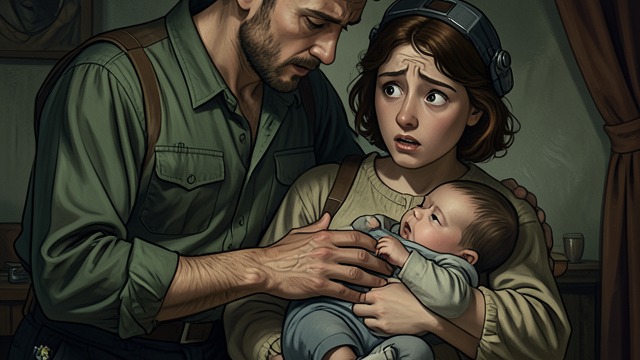
The Beating Heart
Contact breaks through doctrine
When Poor Woodcutter raises a hand against the crying child, his wife guides his palm to her chest. He feels the baby’s heartbeat beneath his hand.
A belief begins to fail
He still repeats the slogans that call the child heartless, but the living pulse unsettles them. The physical encounter gives him a truth he cannot dismiss as easily as a stranger’s argument.
First Steps and First Words
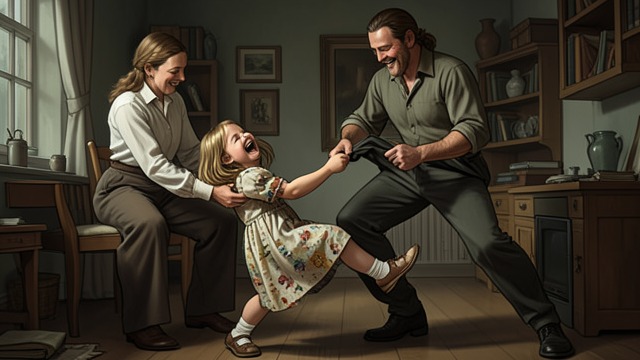
First Steps and First Words
Joy in the hut
The girl pulls herself upright using Poor Woodcutter’s trousers, then laughs when she falls. He lifts her triumphantly and calls for his wife to see.
A family named aloud
The child later calls the couple by parental names. Their bond is no longer only the wife’s private claim: Poor Woodcutter has accepted a place in the child’s everyday family life.
The Final Defense
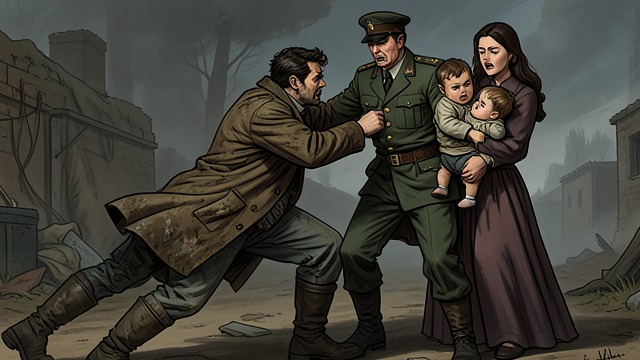
The Final Defense
Betrayal at the threshold
Wood-Alcohol Distiller arrives with armed men to take the girl. Poor Woodcutter first pretends she is his own child, then recognizes that denial will not end the threat.
Love expressed as sacrifice
He attacks the informer and the militiamen, giving Poor Woodcutter’s Wife time to flee with the girl. His final plea is that their child may live, completing his change from fearful opponent to protector.
Before the child arrives
The night the child is brought home
On a night of the baby’s early infancy
As the child begins to walk and speak
Before dawn, when the child is a toddler
